Showing posts with label dystopian. Show all posts

Saturday, June 13, 2015

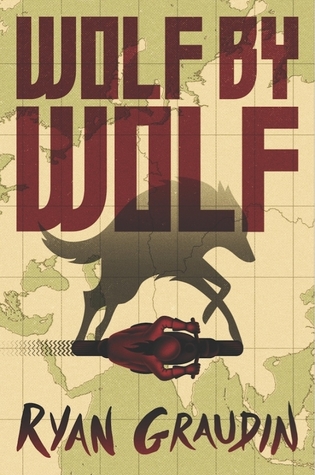
Review: Wolf By Wolf by Ryan Graudin

24807186
source: ARC from Hachette
publication: October 20, 2015, Little, Brown

This is one of the few books I've read recently whose synopsis actually gives you a sense of what the book is about. Wolf By Wolf is about Yael, a girl who survived a World War II death camp only because she was chosen as a science experiment: mysterious injections gave her the ability to change her face at will. Now, she's impersonating Adele Wolf, the victor of a cross-continental motorcycle race, so that she can enter the race, get invited to the ball, and kill Hitler. Meanwhile, she's got to keep everyone thinking she is Adele, including Adele's twin brother and another competitor, Luka, with whom Adele has a hush-hush romantic history.

I really liked this book. It was fast and interesting and didn't recall for me any other YA novels I've read (or movies I've seen, for that matter). I think what I love most is that Yael truly does question her own ruthlessness time and time again—there is a line that she never wants to cross: killing, or causing the deaths of, innocent people. Crossing that line would go against everything she is fighting for, and I think it's really important that this was a concern of hers, because a lot of times characters will feel bad for killing someone but insist that it's in the name of some greater good. Yael knows that that would be a lie, that "greater good" is the kind of justification that can go too far—just look at Hitler.

This is the second Ryan Graudin book I've read (the first being The Walled City) and I am noticing that she is not afraid to give her stories a lot of different elements. In this one, you've got the motorcycle race, the death camp flashbacks, Yael's training, her mission, her relationships with Felix and Luka, and the mystery of what happened at last year's race. Graudin pulls all of these off well; it never feels like too much is going on.

At the same time, though, with this much going on it does detract from the character development a bit. Yael is a complex character with a metric ton of history, so my issue wasn't so much with her as with Felix and Luka. I liked them just fine, but they never felt fully fleshed-out for me—and I wish that Yael had been given a chance to have deeper connections with them (or even just one of them). There weren't really any relationships driving this story: it was all about Yael and the world she lives in, and her mission to make it better. If you're someone who likes plot-driven stories, this won't be so much of a problem for you, but if you subscribe as I do to the mantra that character is king, you might be slightly disappointed.

I am split down the middle when it comes to the prose. It's very innovative and evocative, but sometimes language is just piled on so heavily that it can be distracting. Some sentences are stop-you-in-your-tracks powerful, while others are sort of cringeworthy and had me asking, Why can't you just use adjectives as adjectives??? (Graudin has this habit of using adjectives and verbs as nouns, which I also noticed in The Walled City, and it rarely works for me). But then again, there were so many quotes in the last chapter or two that had me going "Daaaaang," I can't say the writing style wasn't also one of the best things about this book. It was.

Now, Yael's ability to "skinshift"—a word that's not used until the end of the novel—is not entirely explained. I imagine that's because Yael doesn't know how it works, she doesn't know what was in those injections, but I do wish it had been explained somehow. I mean, it would be one thing if she were casting an illusion, but she is literally changing the structure of her face, as well as her eye and hair colors. It seems that her body, however, does not change when she shifts. Which is another anomaly altogether. Suspension of disbelief does not come easily, is all I'm saying.

But! This is a series! There's more room for the things I found lacking in book 1! I look forward to finding out where Yael goes next.

Thursday, February 26, 2015

Review: Red Queen by Victoria Aveyard

I don't even need to add a caption about how beautiful that cover is.
You see it. You know its beauty.
★★★☆☆
source: galley from HarperCollins
publication: February 10, 2015, HarperTeen

I'm struggling with a solid rating on this one because, while there were elements of the book that I hated and almost couldn't tolerate, I liked it overall. I will read the next one. I will probably buy the book in hardcover because a) my ARC is a bit beat-up, and b) The hardcover is shiny. We all know how I love a shiny cover.

But. Here we go.
I've seen a lot of people on Goodreads talking about how similar the plot synopsis of Red Queen sounds to Red Rising. I haven't read Red Rising yet, so I can't speak to that, but I can speak to a similarity that I did notice that no one else has mentioned:
The bones of this book, a lot of the elements that kept the plot moving forward, are straight from The Hunger Games. At first I thought, "Okay, maybe it just starts out sounding like District 12, and then the main character leaves and it turns into something else." But no. The parallels became so consistent and obvious that I started a list of them in my phone:
We start out with main character Mare, who earns for her family by doing something illegal, much the way Katniss earns for hers by hunting illegally. Mare's method of choice is thievery, and her partner in crime is her best friend Kilorn, who she also seems to kind of hate at first. She thinks he's useless or something. There's even a Greasy Sae character, Will, who buys the things she steals in exchange for things her family actually needs.
Mare is jealous of her sister, Gisa, the less prickly sister, but would also do anything to protect her. There we have our Prim character, who's mostly just in the beginning of the story, of course. There's also a conscription that serves as a kind of Reaping, because it takes teenagers from their families to go fight for the government, and arenas where Silvers (upper class people with silver blood and powers) fight /almost/ to the death, but luckily they have people who can heal them. 
Mare gets plucked out of her impoverished life to live with the royal family and, when it's discovered that she has powers even though she's a Red, she is betrothed to the younger prince and forced to pretend that she wants it. Enter, fake romance to please the masses. We've got the rebels who tell Mare that they need her, that she is their only hope, and they even use the words "face of the revolution." They tell her she doesn't understand what she could do with them, much like how Peeta says that Katniss "has no idea, the effect she can have," and they use the metaphor of a drop that breaks the dam instead of a spark that starts the inferno. Change the metaphor all you want, but it's still the same.
Moving along, we have someone telling Mare that she is a pawn in someone else's game, which is a similarity that I probably don't even need to explain. We've got Mare's etiquette coach who doesn't get a lot of screen time but is clearly the Effie Trinket in this scenario, and her trainer, Julian, also known as Haymitch Abernathy. When the royal family leaves court to return home, they gather crowds and force them to listen to speeches, while Peacekeepers—I mean officers—beat anyone who steps out of line or causes a disruption. Victory tour, anyone?
Later, we are tricked into thinking that the rebels brought Mare and Maven to die in a radiation-soaked, abandoned area, only to find out—surprise! It's not dangerous or abandoned at all. It's rebel headquarters, and they've been manipulating the technology to make it look too dangerous to inhabit. This is presumably where the next book, Red Mockingjay, will take place, while the rebels tell Mare what to do and she begins to question their scruples.
And for one last nugget, someone takes a suicide pill on page 320. Because making it a poisonous berry would have been too obvious.

Listen. I didn't go into this book looking to find these parallels. I hadn't seen anyone else compare the book to The Hunger Games and I still haven't. I wish I could have stopped seeing it, but to do that, I would've had to stop reading.
I'm not saying that any of this was done on purpose, but I am saying that it is bad writing. It's bad writing to be unaware that you're ripping off one of the most popular series in the same age bracket as the book you're writing. It's almost worse than being aware that you're doing it, because it shows carelessness.

In fact, the writing is careless all around. It's heavy-handed and full of metaphors that don't work, descriptions that go on too long without managing to paint a vivid picture (because they're so chock full of metaphors that don't work), and hollow emotion. I remember one time specifically when Mare broke down crying for the first time, and I can't even remember what had happened or where in the book it was because I didn't believe the emotion behind it. A lot of Mare's reactions to things seemed to contradict her actual personality and beliefs, so much so that she seemed more indecisive than anything else. It became difficult to keep track of what she actually cares about; one minute she'll do anything to protect Gisa, then she's petty and jealous. One minute she's totally into Cal, then she hates him and Maven's her guy. She wants the Silvers to stop oppressing the Reds, sure, but she hesitates to do anything to make that happen if it means she has to hurt someone—even a Silver, all of whom she claims to despise. 

A few examples of this are: Mare decides she's willing to trade the Colonel's life for Cal's; Mare decides she's going to kill Cal herself; Mare doesn't trust Maven at first; Maven shows up at the Scarlet Guard meeting and Mare doesn't think maybe he's there as a spy for his mother?; Mare knows that the tax collector has to die for the cause and she's fine with it, but then she's sad that his hands will never touch hers again? Even though she's never met him before, doesn't know him, and has never touched his hands until now? And so on. She's so inconsistent with her feelings and her strategy that I did not understand what she was doing half the time.

Finally, my other issue with Mare is that she has no skills. Or at least, her skills are never utilized to their full potential. She discovers her lightning power and rather quickly masters it, but this power is not specific to her life the way Katniss's hunting skills are specific to hers. I wish that Mare would have used her thieving skills in combat somehow, tied her backstory up with the person she becomes, but instead she ends up dependent on her lightning and nothing else. Adapting her District 12 survival skills into arena survival skills is part of what makes Katniss such a well-developed character—not doing the same for Mare is a glaring missed opportunity.

Aveyard tries too hard to make her writing pretty, constantly repeating lines like "red as the dawn" and "the shadow to the flame" without realizing that half of them don't make sense. [Flames don't have shadows, they have reflections. They have light. You need something else, something blocking the flame, to create a shadow.] Some of the descriptive, figurative language works, but most of it feels weak and slippery; making sense of it is like trying to hold water in your hands: You think you've got it, but in the end it falls through your fingers. Most of the one-liners that are supposed to leave an impact would be effective if they did not get dragged out or if the author stopped trying to explain them so much. She doesn't leave a whole lot to the reader to figure out.
"The world is Silver, but it is also gray. There is no black-and-white."
Okay, fine. But... can I try something?
"The world is Silver, but it is also gray."
BAM. You don't need to tell me that the world being gray means there is no black-and-white, because a) Nobody ever said there was black-and-white, and b) I get it. Gray is gray. Gray is not black or white. Just the word "gray" carries with it the moral ambiguity that you're trying to get across. Leave the readers to work with connotations on their own! I picked this example by flipping to a random page, but it is by no means the only one—most of the figurative language, in fact, is written this way.

As for the plot, it was pretty conventional and I saw both of the plot twists coming before I was halfway done with the book, but I have no complaints past that. It's well-paced and I didn't think it was too light or silly to be taken seriously. Curiosity got me through a lot of it.

I'm not pandering when I say that I did like this book. It was entertaining and I liked that the characters had a semblance of moral ambiguity (even though it came across as moral inconsistency), and I'm interested in where it will go. I liked Cal because, what can I say, I'm a sucker for the boys with king potential and a lot of weight on their shoulders. But comparing this book to The Winner's Curse does no one any favors; it does not even come close to that level of complexity and strategy and emotional depth. It takes features from The Hunger Games but, unlike that series, doesn't have anything to say. This is definitely closer to the Selection end of the dystopia/fantasy spectrum, which is fine, but sometimes YA readers expect more. That's all I'm saying.

Friday, November 14, 2014

Review: In the Afterlight

Okay, I have a lot of reviews to write.
I'll start with In the Afterlight, because someone actually asked me for this one.

★★★★☆
When I finished Never Fade, I thought I was going to die before the final book in the series came out. Like, what even was that ending? How can you do that? Also: never trust an e-reader, because they fool you into thinking there are more pages when THERE ARE NOT.

But I didn't reread Never Fade before starting In the Afterlight, and to be honest I was confused to the point of boredom for the first 30 pages or so. Strangely, I didn't really remember a thing that any of the characters were talking about, or why they were doing the things they were doing, or even where they were. A little bit of a brush-up would have been nice— I'm not talking the annoying summaries that Vampire Academy has in every book, but leave me some crumbs, maybe?

Once it got going, though... nope, I was still bored. Ha! You thought I was going to say something nice! I started to figure out where and why and all those types of questions, but I still wanted to find out when. As in, when is something actually going to happen? The whole middle half of the book (from the 25% mark to the 75% mark) is planning. Organizing, strategizing, planning and back-up-planning. There are a few times where the characters have quiet moments to shine, which were the moments I was living for, but I could have done with about 100 fewer pages of the constant worrying about doing things without actually doing things.

And Liam. I realize that Liam is a little too well-natured and optimistic for his own good, but I really didn't need it drilled into my head repeatedly by Cole and Ruby, who insisted on treating him like a child. Ruby knew perfectly well that he was capable of leading people and accomplishing pretty much whatever he wanted to accomplish, but she wouldn't let him in on any of her godforsaken planning because— what? They couldn't have used someone whose primary concern was helping other people, rather than exacting revenge or taking down the entire psi camp system? I don't buy it. Maybe Cole had a reason for not trusting Liam with the whole revolution thing— he hasn't seen Liam in action, doesn't know what he's been through or what he's capable of, but at the same time he never gave him a chance. It was like:
COLE: Okay, fine, prove yourself, little bro.
LIAM: Great! I really think that—
COLE: LOL no you don't. You don't think. And also you're wrong, and you should leave.
LIAM: But—
COLE: Hey, I gave you a chance. You blew it. You're not ready for this. While you've been messing around, running for your life and learning to survive and hiding from people who would institutionalize and torture you, I've been training in a professional facility of rebels and brooding. I do a lot of brooding, bro. Also speeches. So I think I know a thing or two about who is ready and who is not, and also I was totally elected into this position and did not just take it for myself without input from anyone else.
LIAM: I definitely call shenanigans.

My shining lights through the dark days of underground living were Chubs (god, I love Chubs and his "big Chubsie mouth") and Vida and especially Zu. Zu saved the entire book the moment she [spoiler alert] opened her mouth. She somehow managed to be a reminder of each of the original characters' value as humans, while actually being a whole person unto herself. I couldn't get enough of that girl or her friendship with Vida.

Once things got moving, the book was sincerely great. Ruby's character development made me finally 100% love her, and Liam finally had his moment to shine (sorry Cole had to be sacrificed in the name of Liam getting a chance to prove himself, but I'm actually okay with it). The rest was moving but never preachy, compelling but never shallow, and that ending. That ending was absolutely perfect. Strangely, the last sentences of both the book itself and the acknowledgements made me cry. God, I'm so lame.
"And the open road rolled out in front of us."
This was my favorite kind of ending, which, if you've read my series-finale reviews before, you know is the bittersweet, somewhat open kind, like Requiem. Ruby mentions that Liam will go back to North Carolina and she'll go back to Virginia and they'll have to find a way to make it work, but any discerning reader will notice that a) Those two states are right next to each other, and b) They will both be 18 soon and can pretty much live wherever they want. The separation isn't permanent, but it's what needs to happen for now, because they finally have their parents back. And that's more than okay. So until they reenter their former lives with their families, they're going to reenter a more recent former life, but one with a sense of peace: driving, together, with no destination in mind.


I promise to do reviews of Blue Lily, Lily Blue (which I read almost 2 months ago and still haven't reviewed because I basically just want to write the word "perfect" over and over), and The Retribution of Mara Dyer. I'm writing that down so that I can't slack off.

Tuesday, May 13, 2014

Review: The Murder Complex by Lindsay Cummings


★★★☆☆

The first half of this book was great. It was the kind of great where I had no idea what was going on, but I was interested in finding out. In the battle between questions and answers, questions were dominating. But I was ready for answers to rebound, thinking they'd lose the battle but win the war. I was on board with the no-prisoners-taking heroine and the strong, weeping hero.

And then I started wondering if I was actually going to get any answers.
And then the questions kept winning battles, because when the answers came to fight, they weren't armed with explanations.

I think there is a particular brand of science fiction that I just don't get along with very well. It's the kind that makes good science evil, and lets it take over the entire story. When all of the background information and even the character histories revolve around the futuristic science of the book, I can't deal. I need more than that. I need characters to be people and have relationships, not just experiments whose relationships are defined by their world. I need subtlety and complexity built into every character, in the ways they act and react, in the way they treat others and how they communicate, and in the way they see the world. I need to know without a doubt that in a given situation, this character would not do anything differently. I need a string of affection or hatred or some powerful connective emotion to attach me to a character. 

These characters have the strings, ready to tie themselves to me, but they never quite got around to the tying.

As for the plot... well. This book was so bloody and action-packed it's almost like nothing else mattered. Aptly, people drop like flies in The Murder Complex, and our heroine is so busy cracking necks and thrusting (not shooting!) arrows through eyeballs that I think she's trying to distract us from the scatterbrained plot and the fact that all but one of her relationships are one-dimensional and boring. When I wasn't asking myself, "What the flux is going on?" I was asking myself, "And I'm supposed to care about this... why?" Absolutely nothing about this book was subtle. There were no undertones, no characters worming their way into my heart, it was just. constant. ACTION. At one point I was exhausted for Meadow, when I figured it was finally time for her to rest and suddenly her father* wanted to do some training. What did she do? She kept going. Kudos to you, Meadow, but I'm human, and I'm a fan of sleeping after I've been running and fighting and killing all day-- no, all week. 

Basically, there wasn't anything about this book that didn't keep me interested. It was just that there also wasn't anything that kept me caring. It was all action and science and bad guys, and not a whole lot of human moments. And the human moments are kind of why I read in the first place.

*her relationship with her father is the one I mentioned that is not one-dimensional or boring. Her judgment is so clouded that she thinks he doesn't love her because he's always only cared about training her-- but she slowly comes to realize, why does he train her so hard? Because he needs her to survive. Because he can't lose her. He doesn't show affection because he thinks it toughens her up. Brilliant.

Wednesday, February 5, 2014

Review: Ignite Me by Tahereh Mafi


★★★★★

Seriously, if you haven't given this series a chance yet, you really, really ought to do so. Ignore the Goodreads reviewers' complaints about prose. I get where they're coming from, and I can tell you right now those people are only hurting themselves by not giving Tahereh Mafi the benefit of the doubt. Because character development. The prose in the first book is meant to reflect who Juliette was at that point, and she is not that girl anymore.

This review is going to contain spoilers for Shatter Me and Unravel me, so if you have not read those yet, please read them now. I'll wait.


Okay, ready?
So. Ignite Me picks up after Juliette has broken both Adam's and Warner's hearts and been shot by their father. She finds out that Omega Point has been destroyed and everyone in it is dead. Well, almost everyone. We're supposed to assume that there's a very small chance Adam and Kenji and the rest made it out alive, but we all know better, right? Adam's out there, still crying like a baby because Juliette broke up with him or because he thinks she's dead (dude is never satisfied, amirite) and Kenji's out there with him, telling him how annoying all his drama is.
And Juliette is with Warner. Who saved her life, even though she broke his heart.
Man, this book was everything I wanted it to be. Of all the trilogies that have ended in the past year, this one had the most satisfying ending. Honestly, it's the first series-ender since Reached that didn't give me that feeling where my stomach drops and my blood runs cold because I've just realized it's not going to end how I wanted it to end. I mean, it had about the same effect as Requiem-- which I know most people hated (they're all a bunch of know-nothing Jon Snows if you ask me)-- everything just built up and built up to a place that made sense, that didn't try to make the reader feel like an idiot for wanting a happy ending. Sure, it's not a happy ending for everyone, but all in all it's much happier than it could have been.
Why?
Because of Juliette Ferrars.
She thinks in mostly normal sentences. She doesn't cross out her thoughts. She stands up for herself, and for everyone else. She's done wallowing in self-pity and she's done letting her power control her. She's learning to control it, in more ways than one.
I'm trying not to give away too much since the book just came out yesterday, so I'll just say this: she realizes that one relationship is wrong for her. And she finds herself with two right ones (not necessarily romantic).
And stuff.
Goes.
Down.

This book is perfectly paced, has consistent humor balanced well with all the angst, and anyone who complained of insta-love in the first book is going to be ridiculously pleased with this one. There's not a dull moment in the entire book, but really the thing most worth talking about is the character development. And not just Juliette's. Adam's, Warner's, Kenji's (keep in mind that not all character development is good development). I want to write amusing songs about their relationships with each other. Also, move over Adji (Kendam?), there's a new brotp in town. More of a reluctant, nervous-laughter brotp, but it makes me so, so happy.
In fact, here's a spoiler-lite list of things about this book that make me happy:
  • Kenji (◕‿◕✿)
  • No crossouts Ê˜‿ʘ 
  • Warner being serious (◡‿◡✿)
  • Warner joking (✿◠‿◠)
  • Nobody understanding Warner's sense of humor (╹◡╹)
  • Juliette being a badass (◕‿-)
  • A certain "unidentified roadkill" comment (◑‿◐)
  • Chapter 55 (✿ ♥‿♥)
  • James 。◕ ‿ ◕。
  • Juliette telling Warner what to do (~ ̄▽ ̄)~
  • "Two hundred and sixty-four days I was in there and the whole time, I had the power to break myself out and I didn't, because I had no idea I would. Because I never even tried. Because I let the world teach me to hate myself. I was a coward, who needed someone else to tell me I was worth something before I took any steps to save myself." á•™(⇀‸↼‶)á•—
  • JULIETTE FERRARS TAKING CONTROL OF HER OWN GOSHDARN LIFE (。♥‿♥。)
Let's recall that I gave Shatter Me 2 stars.
And then I gave Unravel Me 4 stars.
Well, she's finally done it.
I'm giving Ignite Me 5 stars, and I feel good about it.

Tuesday, October 29, 2013

Review: Allegiant by Veronica Roth

At least it has the best cover of the series.
When I wrote the title of this review just now, in my head I heard the "dun dun" that they play at the beginning of court scenes in every Law & Order episode. You know the one? The one that makes you feel like, okay, this is going to be tense. Because that's how I feel right now. I've been putting off this review-- I wasn't really even sure I was going to write one-- because it's going to be tense. 

Warning: I cannot write this review without major spoilers. I just can't. So if you haven't read Allegiant yet, abort Mission Read-Paige's-Blog until the appropriate mission prep has been accomplished.

***SPOILERS BEYOND THIS POINT***

★★☆☆☆
Let me say this now before I get wildly ahead of myself talking about the ending. The ending is not the reason I'm giving this book 2/5 stars. It's part of the reason, yes, but ultimately I was disappointed with the whole book.

The end of Insurgent promised some explosive conflict. We found out that the people in Chicago had been locked in there on purpose, and people started shouting. The outside world was beckoning and we were finally going to find out what's been going on out there. I was prepared to have to hold on to my figurative hat, if you catch my drift.

But we did find out what was going on out there, and anticlimactically, the answer was "not much." Some people doing crazy genetic experiments that created more plot issues than they solved (if they could manipulate DNA to create the "genetically damaged" people, why couldn't they manipulate it in the reverse and create "genetically pure" people?), some people eschewing government and living exactly like the factionless were before Evelyn came along, and a few other experiment cities. Where is the rest of it? And more importantly, where is the conflict? For the little conflict that does exist between the people outside the fence and the leaders inside, it seems like Tris is the only person with any idea of how to handle it correctly. And she is sixteen years old. It bothered me that every single leader in Allegiant turned into a villain at some point. Marcus, Evelyn, Zoe, David, and even Johanna. When did Tris become the all-knowing wise girl who didn't make mistakes, while every powerful person around her was tunnel-visioned into doing everything wrong?

And the science. I'm not an expert, but I didn't like the science. Aside from the terms "genetically damaged" and "genetically pure," which made me cringe every single time-- a lot, considering how overused they were-- I don't think this book benefited (the way Reached did, for example) from going the sci-fi route. It took the focus away from the Bureau/Fringe/Chicago tension and slowed the pace so much that at the end of its 526 pages, it still didn't feel like half of the book Divergent was in 487 pages.

The character stuff was... there. Barely. Tris's development pretty much happened at the end of Insurgent, so in Allegiant it was actually pretty great to see her more confident in what she believes and taking control and valuing her life. I even enjoyed seeing Four make a mistake and have to pay for it, showing Tris once again that he is not perfect and everyone is broken in their own ways. But their scenes together made me uncomfortable in two completely different ways: either they were throwing themselves at each other for no reason other than the fact that they were both there, or they were fighting. I hate it when they fight, but a part of me likes it too. Real couples fight and make it through, which is what Four and Tris have always done, but I could have used some more in-between scenes, where they're neither fighting nor kissing. I wanted to see them supporting each other emotionally-- healing each other, rather than Tris healing herself and Four kind of wandering, waiting for her to realize he needed her help. (The alternating viewpoints were also occasionally confusing to me. I would be reading a chapter thinking it was one person narrating, and then he/she would refer to herself/himself in third person and I'd have to go back and read whose name was at the beginning of the chapter. Which means the voices weren't distinct enough.)
Also, she couldn't have waited to put Uriah into a coma later? He was the comic relief! And also I don't care what anyone says, he did not have to die.
I can't skip over Peter, either. I absolutely love Peter. He is my favorite character in the series. I find him simply fascinating-- which is why it is so extremely upsetting to me that he's left as a blank slate. But it makes sense that an awful person such as Peter is going to choose the awful person's way out: instead of developing into a less awful person, he uses his "damaged" genes as an excuse for the way he is, and wipes his memory clean to get away from himself. But that creates another plot hole, doesn't it? If his penchant for violence is in his genes, wiping his memory won't fix him. And if he's really such an awful person, why does he feel so badly about it that he doesn't want to remember the things he's done? I can't decide anymore what's consistent with his character and what's not.

Now that I've established that I do have other reasons for my 2-star rating, I can move on to the ending.

So, the majority of reactions to Allegiant that I have seen have been in two camps:

  1. People who are angry or upset about the book for one main reason, but possibly also a variety of reasons.
  2. People who are defending an author's right to end her characters' story the way she felt it had to end. These people are largely assuming that the negative reactions to the book are based solely on the end, rather than the other 450 or so pages.
But you see, the majority of readers of this book are in both camps-- like, say, me. My main emotion for the past week or so has been anger. Anger that this book was not what I thought I had been looking forward to for the past year and a half. Anger that this, the final book in the trilogy, seemed to render it all utterly pointless to me. Anger-- and this is the biggest one of all-- that Tris's death has in fact only made me angry. When a main character dies, I want to feel sad. I want to expel that sadness through tears while listening to sad songs that remind me of the people left behind; I want to cry it out so that later I can look at it and think, "Wow, what a way to go." The main character dying at the end has the potential to turn something into a great story (especially for masochists like me).

And don't get me wrong, I really appreciate Veronica Roth's explanation of why Tris died. And I really appreciate that she acknowledges my right to still think she didn't quite do it justice. I understand now that for her, the series was about Tris's journey from beginning to end-- but for me, the end didn't have to be her death, because her journey was finished before that. She made it through; she defined for herself what selflessness and bravery were, and she was fine.

And then she got shot.

If finishing the story were like trying to choose a meal to get rid of your hunger, this felt like the fastfood option. It seemed like a cheap and ultimately unsatisfying way out and because of it, the story never truly got finished. The hunger just gets replaced by all those undesirable things that come with choosing the fastfood option. Though she was only in the position to get shot because of a sacrifice she decided to chance to show her brother she loved him, getting shot was not the sacrifice. She survived the part where Caleb would have died, and then she died because she was what? Unarmed? Yes, it was very Tris of her to take that risk in her brother's place, but when I read it, the part where she actually died didn't sit right. Not for Tris. It felt extra. One last way to throw a wrench in the works.

As a fan of bittersweet, semi-ambiguous endings, especially for series like this, I was overwhelmingly disappointed. There was no sweetness. There was no ambiguity. Tris died, and now Four-- who Tris has literally just learned is as broken as she was before Allegiant-- not only has to live with guilt over Uriah's death, but with the death of the one person who's ever made him feel like he mattered. The one person who ever told him he was whole.

And this, my friends, is my biggest gripe: we don't get to see him become whole again. We don't get to see him deal with his grief. We don't get to see how the communities inside and outside the fence change and heal themselves, which is something that unquestionably should have been included in the primary plot of the book. All we get is an epilogue, two and a half years later, where we find out that Four and Christina have become friends, and he basically gives us a roster of everyone's jobs, like some kind of "Where Are They Now" special.

I recently had a friend point out to me that the Divergent series as a whole contains a lot of gratuitous death. Characters die left and right, quickly and unceremoniously, and it's accepted as a fact of life. While Tris's death was a bigger deal to everyone than most of the others, Allegiant did feel like more of the same on this issue. I remember texting my sister: "200 pages in and three people have already died." It starts to feel superfluous and lessens the impact when, oops, down goes our main character too.

So it's easy to say I did not enjoy Allegiant. But with an average of 4 stars, it's also easy to say that I enjoyed the series as a whole. And even though I'm stuck on the Anger stage of grief, I thank Veronica Roth. I thank her for bringing me to the Dauntless compound, for showing me true selflessness, for the wonders of ferris wheels and zip lines, for Peter, the actual anti-hero, for the word "pansycake," for a boy who grew up broken and hid himself away until he finally, finally allowed himself to be changed by a bright-eyed Stiff he respected so much that he sometimes forgot she was vulnerable too. But most of all I thank her for Tris, the first jumper, the girl who gave her life for her brother after he betrayed her. She did so well.

Saturday, October 26, 2013

Review: Pawn by Aimee Carter

Cool, simple cover. I hope they stick with this design for the whole series.
So, it's no secret that dystopias are a dime a dozen in young adult fiction these days. Everyone's got to get their two cents in about how they think the world will fall, or at least what they think would be the worst way for the world to fall. And it's no secret that a lot of people are sick of it.
Me? I'm not one of those people. I have a six-foot-tall bookcase dedicated to YA dystopias and I would love to fill it up. If I could be the person with the widest knowledge and possession of quality YA dystopias in the world, I would gladly have business cards made up for myself. Maybe someday I will tire of suspending my disbelief when a dystopia seems unlikely, or worrying what if when it doesn't, but today is not that day. So, disclaimer: I write this review from the perspective of someone who is not yet weary of dismal futuristic worlds.

Pawn is about a girl named Kitty, who lives in the United States of the late 21st century, where seventeen-year-olds must take a test on their birthday to determine what kind of jobs they are eligible for and how much they can contribute to society. They are ranked from I to VI based on their test scores, and anyone with a score of I is sent "Elsewhere," never to be seen again. IIs are given the lowliest of jobs, and VIs the most respectable. When Kitty earns a III because she didn't have enough time on her test, she knows that her options are limited-- and none of them are good. But then she's approached by the president, Daxton Hart, whose family "saved" the country from disaster and has been ruling with an iron fist ever since, and he offers her a VII-- the rank that only the Harts themselves have. And all she has to do is change her whole appearance and step in for Daxton's niece, Lila, who was killed for speaking out against her family's objectives.

I have to say, I was not entirely convinced by the premise of this particular dystopia, so I did what was required of me: I suspended my disbelief. I did not ask why or how or what is the rest of the world up to-- though obviously I'm asking those questions now. It's much easier to get into this story if you accept that things are they way they are and move on. Once you do that, you'll find that the story itself is actually pretty interesting. There's political intrigue, action, some science, and a few key relationships* that set Pawn apart from the crowd. Not to mention the whole concept of the pawn's neglected importance in the game? Watch out.

*particularly, the complicated relationships between all members of the Hart family, and the real Lila's relationships with both Greyson and Knox.

Now, if you're familiar with my reviews, you know that I usually pay special attention to characters. Characters are what make or break a story for me, so let me start with Kitty. Superficially her name is what bothers me the most about her, but that might be only because I have no other strong feelings about her. She didn't have much of a personality, which is what made her such a good pawn for the Harts' twisted political game. Moments of spunk and insistence upon risking her life for the lives of people she a) loves or b) barely knows were not enough to give her a permanent place in my heart. In fact, by the time the second book comes out, I'm sure I'll have to re-learn anything I might have learned about her in book one. And if Kitty was unmemorable, you can imagine how I feel about the rest of the cast. The main character should be the one that demands the most attention, but I often found that I was more intrigued by Knox, whose motivations were mysterious but his intentions always seemed honorable. I trusted him and then questioned why I trusted him, and thought maybe I shouldn't trust him. In other words, I spent more time trying to figure Knox out than forcing myself to care about the other characters. Benjy was flat-- I was told more about him than I was shown; Nina and Tabs were plot devices; Daxton was your typical scheevy villain; Celia was the requisite morally ambiguous female almost-villain who thinks she's doing the right thing; Greyson could have been interesting if he had more screen time; and so on.

There were occasional plot twists in the book that had me itching to read more, now, but it did take me longer to get through Pawn than it would have if I had been thoroughly hooked. It's an intriguing and original addition to the dystopian genre, but if you're looking to connect with the characters on any level deeper than the surface (and by 'surface' I mean "I'm reading about these characters and therefore I connect with them"), stick with Legend-- or even Shatter Me, which has characters you'll probably hate but at least you'll feel strongly about them.
★★★☆☆

P.S. The series is called The Blackcoat Rebellion! I love this series title. Not only because I fancy any series title that isn't based on the title of the first book, but because it tells you where the series itself is going.

Monday, October 7, 2013

Review: These Broken Stars

A cover that is actually 100% true to an actual scene in the book! Le gasp!
*I received a copy of These Broken Stars from Disney Book Group in exchange for an honest review.

Summary: Lilac is an heiress, a socialite, the privileged daughter of the protective founder of a company that explores and develops space. Tarver is a war-hero soldier from a modest but close-knit family, who is all but unaware of the ramifications of smiling at the pretty redhead across the room. When the spaceship in which they're hurtling through space suddenly breaks down and everyone aboard must flee to their lifeboats ("pods") a la Titanic, Lilac and Tarver end up in the same pod, crash-landing on a seemingly abandoned but strangely developed planet. They're the only humans in the entire world, but strange things begin to happen and secrets about Lilac's father's company are slowly revealed while the two of them struggle to survive.

Review: You guys, this book is what Beautiful Creatures should have been. What?, you're saying to me, Beautiful Creatures is not science fiction.
Yes, I know. That's not what I'm talking about. I'm talking about the written-by-two-authors-with-two-equally-important-protagonists thing. This book does it right. Why, you ask? Because Amie Kaufman and Megan Spooner understand that with two authors and two leads, it makes so much more sense to tell the story from two points of view. I don't know how they broke it down, if one author wrote Tarver and one author wrote Lilac, or if they split it a different way, but I don't care-- because it's obvious that they worked together on this.
The chapters alternate between Tarver's point of view and Lilac's, but you don't have that sense of constantly being jolted between the two, right when you were getting into the flow of one character's narration. It's done cohesively, and the scenes are written such that it makes sense for Tarver to narrate this scene and for Lilac to narrate that scene, or vice versa. There are no chapters where you go, man, I wish I were in the other character's head for this part, the way I did for oh, 95 percent of Beautiful Creatures, wherein every chapter is all-Ethan-all-the-time despite the fact that Lena is by far the more captivating character.
But I digress.
These Broken Stars is not your average science fiction novel. It sparkles. It's sparkly. I don't know how else to describe it. And, boys, if you're reading this, stop making that face. Sparkles do not a girly book make. There are spaceships and aliens and soldiers and vast amounts of sarcasm here, too. The girl in the dress on the cover is just that: a girl in a dress. I've never known a boy to hate girls in dresses in real life, so I'll never understand why they avoid books with girls in dresses.
The characters in this book are few, I will say, but they are vivid and dynamic and they have so many facets that you don't need any more characters. Lilac is privileged and occasionally shallow, yes, but she is also whip-smart and fiercely protective of the people she loves. She knows more about the technology of her world than just about anyone, and she's an equal match for Tarver, the war hero who knows more about survival than just about anyone. Tarver is sarcastic; he doesn't respond well to stupid questions, and his mental quips about Lilac will get you through the first half (maybe less) of the book while the two still mostly dislike each other.
My favorite thing about Lilac is that she could have been entirely selfish, having been raised in a privileged environment where she was coddled by everyone who dared to get to know her, but she isn't. She is, for the most part, selfless-- and not in that Bella way that makes her entirely useless. She has intelligence to back up her selflessness; when she needs to help someone, when for any reason someone is counting on her for their survival, she knows how to handle the situation. Girlfriend gets things done.
My favorite thing about Tarver is that he can be both amusing and serious. After Lilac treats him like he doesn't deserve to breathe the same air as her, he thinks, "Duh, I should have known," but then he thinks about it some more and decides she does not have the right to treat him that way. He's respectful to her, but condescendingly so, which I love. Not knowing her motivations for her cruelty, he has every right to mentally complain and make jokes about being stuck with this girl on a strange planet with nobody else around. But at the same time, he expertly balances the fact that she saved his life before they got here with the fact that now it's up to him to keep her alive too.
As for the plot, well, honestly there's not much of it. It's a subtle thing that creeps along and builds tension and then explodes in your face (it's a contained explosion), but for the most part of the book it's a whisper in your ear. It's something that demands your attention, but you can't really say why. All you know is that you want to keep reading. And the romance? Not really a slow-burn, but not really an insta-love situation either. Tarver and Lilac just work. They're a good team, and once they get past the I-hate-you, I-hate-you-more stage, it's actually endearing that the majority of the book focuses on their relationship.

I don't know where the next book is going from here, but I'm sure it will take me with it. I hope it shines with the same subtle intensity as this one, and I hope we get some more awesome characters like Tarver and Lilac. Sparkle on, Starbound series.
★★★★½

Saturday, September 28, 2013

Review: Never Fade by Alexandra Bracken

I received an ebook of Never Fade from Disney
Hyperion in exchange for an honest review.
Let me explain to you why I hate reading on my e-reader. Well, one of the many reasons. The biggest reason right now.
You cannot tell when the book is almost over. Sure, there is a little progress bar. But do you ever look at it? No.
You get to the last sentence, and try to turn the page, and what do you find?
Nothing.
Oops. The book is over. You have to wait another year to find out what happens next-- "next" meaning after you yell "AGCHGHH?!?" eighteen times and forcefully throw your expensive e-reader onto a hopefully cushioned surface.

Never Fade begins six months after the end of The Darkest Minds, and Ruby has been training with the Children's League since then. She's not sure she's on their side yet, but she's doing what she can to make sure they're on her side. Which brings me to my first point: Ruby Daly. You could read this book for her character development alone, and still feel fulfilled. Remember when Ruby was afraid of her power? No more. Remember when Ruby carefully schooled her face into a mask of indifference because she was afraid of being noticed? No more. (Now her indifferent mask is meant to keep people out, because her feelings are none of their goddamn business.) Her nickname around the League is Medusa, and she's earned it. Six months without anyone who loves her, or contrarily anyone who would kill her for being Orange, have produced a Ruby Daly who has no more soft edges.

Next up: Plot. There is so much more action and drama in this book. In The Darkest Minds, we had a plot that was kind of like one of those walking conveyor belts at large airports-- it was a smooth power-walk from one point to the next, without many off-the-charts spikes in action or drama. Never Fade is more like a rollercoaster: so fast and wild that you come out of it with wind-blown hair and a mild headache. But it's... the good kind of headache?

Moving on to... new characters! These two new characters in particular could have been thrown at me, they could have been lifeless nobodies whose sole purpose was to fill the void left by missing characters from Book 1, but they were not. Vida jumped out in front of me, told me we were going to be friends but I better not step on her toes, and then walked me to my car, threatening creepy dudes with profanity and knives. Jude walked up next to me, introduced himself, talked about his fears but tried to make it seem like he wasn't afraid, and followed me to my car like a loyal puppy dog. They're not Chubs and Liam, but neither are they replacement-Chubs-and-Liam*. You can't help but love them.

*No, I will not disclose whether Chubs and/or Liam are in Never Fade. Sit down.

The writing even improves on the first book, with practically genius tension-building and tension-diffusing both. Naturally comedic dialogue at all the right moments and heartfelt or strategic dialogue everywhere in between-- it's part of what keeps this book so consistent with the first one, when so much of the plot and cast are so completely different.

I have to say the only thing I did not like about this book was that there was so much drama that was not character-centric. Certain characters and relationships weren't given nearly as much attention as would have satisfied me, given the setup from Book 1. It was so focused on the action and all the different conflicting groups of people that the more personal touches, which I loved so much about The Darkest Minds, faded into the background. But at the same time, this made it exponentially more effective when the focus was on the personal elements-- when the characters would really step into their roles of who they have to be for each other, rather than who they have to be for everyone else (there was ONE LINE that turned me into a flailing, squealing mess). I just wish it could have happened more often.

Finally, back to the end. I have to talk about the end. I won't tell you what happens, but I will tell you it ends even more suddenly and torturously than the first book did. But instead of leaving you with that "NO THIS IS NOT OKAY" feeling, it leaves you with a sly grin on your face and the feeling that maybe, just maybe, this time the upper hand is just waiting for your beloved characters to grab it. It's almost theirs.
★★★★☆
Four stars for now, but I get the feeling this is going to end up being one of those books that keeps on poking at my thoughts until I give it five stars.

Tuesday, July 2, 2013

Review: Untold by Sarah Rees Brennan (spoiler-free)

A little story about the cover: I like my covers to match.
I was upset when I found out it would not match the first book.
I still like the original cover of Unspoken better, but am happy to accept this one.
Oh, lawd, this book broke me.
And put me back together.
And broke me again.
Several times.

What is there to say about Sarah Rees Brennan's writing that I didn't already say in my Unspoken review? The woman is hilarious. This book may be even funnier than Unspoken. But the woman is also evil, and Untold may also be even more heartbreaking.

Characters

I'm a sucker for a good character. Any good character, really. But these aren't just any good characters. You're going to wish you had a Kami Glass, Lady Sleuth, in your life. Kami is not only witty and entertaining, but she has the endearing quality of being so objective that she sees both the best and the possible worst in everyone. She's no damsel in distress, but she's not an invulnerable stone either. You're going to simultaneously want your own Jared Lynburn and hope that you never, ever get one. He's a bad boy but he doesn't really know why. He's full of anger and despair but also lightness and vulnerability similar to Kami's. You're even going to love the overly-boy-friendly Holly, who most other books would have turned into a teenaged nemesis in a frenzy of girl-hate. She's wide-eyed but also logical, friendly but also lonely. All of the characters are so beautifully complicated, I could go on and on, but I'll spare you. Just. Yes. Good.
The above is a direct quote from my Unspoken review. Every single sentence of that still applies, but this time I won't spare you. Because now I have to talk about Angela, Rusty and Ash too. I love Angela because she's a total badass without even trying-- no, really, she does not try. If there's something that Angela has to try to do, she does not do it (I had a kind friend point out that Angela and I are spirit sisters in that way). That's the Montgomery way. People are scared of Angela because one glare says she can end you and then immediately take a nap-- not because it took so much effort, but because being awake isn't really her thing. Angela likes having people scared of her, because it means they won't mess with the people she loves. Rusty is similar in that if you make him do a thing, he will request a snack and a nap. He takes exactly two things seriously: Angela and Kami. If you make one of them cry, he will punch you. And then he will make a joke about his dashing good looks and irresistible charm.
As for Ash, I was never quite sure how I felt about him before, but I know now. He is a beautiful squishable puppy dog. He is the non-Lynburn Lynburn, where Jared is the Lynburn non-Lynburn. Don't make that face at me! I am making sense!

Pacing, plot and all that good stuff

Well, I stayed up until 3:30a.m. to finish it. So.

The hacky sack


I already mentioned the breaking and the putting back together and the re-breaking. The hacky sack is back. Literary masochists, I call upon thee to preorder this book right now! You will not be disappointed! You'll laugh (a lot), you'll want to strangle some people (mostly Jared, "the most infuriating idiot in all the land"), you'll dance with glee and throw imaginary sparkles into the air because finally everything seems good and right, and then you'll realize there are too many pages left. Too many pages. TOO MANY PAGES.
And once again you'll be lying on the cold, hard ground, shaming no one but yourself because you knew SRB was trouble when she walked in. You let yourself hope for too much, and then she did that thing she does, because she gets her lifeblood from your tears.

But it was fun, and I'd do it again. And not just for the part where Jared and Ash both decide they want Rusty.
★★★★★

Monday, May 13, 2013

Review: Icons


Welp, that happened. Unfortunately.

It's always interesting to see how an author fares as a solo act when for so long she has been part of a team-- and a rather popular team, at that. I wanted to know if I'd like Margaret Stohl's writing on its own, not because I was such a huge fan of Beautiful Creatures, but because I was not. I was expressly indifferent (even antagonistic, sometimes) toward that series and toward MC Ethan in particular, and I wanted this to be more up my alley. I wanted to like a story told by Margie Stohl because I have met her and she is awesome.

Alas, you don't always get what you want.

It's hard to review Icons because it didn't really even feel like a story to me. It felt like a bunch of characters thrown into a situation they didn't understand, with some people tossing facts at them until suddenly they think they've got it all figured out. I, however, still don't have anything figured out. What are the Icons, exactly? Why did the House of Lords come? Why are they called that? Why does the Embassy work with them? What are they doing that is so horrible it incites a Rebellion, and why have they gotten away with it for so long? What does any of it have to do with Dol's and Ro's and Tima's and Lucas's powers?* These questions should have been answered in book one. Book two should be about progressing the story along, not filling us in on the background information that the first book left out. This book does a horrible job of explaining itself, to the point where I was so confused I felt like I was trying to swim to the surface of the ocean with no knowledge of which direction was up. I wanted to just give up, stop swimming, see if maybe I'd float to the top somehow despite the fact that I'd been down so long that all the air was gone from my lungs. Holy extended metaphor, Batman. I'm just trying to give you a sense of how I felt reading this book-- that it was neverending and even a little suffocating.
[*It's possible that if I read the book again, I'd find the answers to at least some of these questions. But I am not going down the read-a-book-a-second-time-to-see-if-you-like-it-better road again.]

I haven't read very many alien books, so I can't tell you which ones come out on top of this one, but I can tell you that there are many of them. Even as someone whose experience with alien books pretty much starts and ends with The Host, the concept behind Icons did not seem groundbreaking to me. Coupled with the snoozefest of a narrator and the barely-interesting other main characters, that pretty much makes this a no-go for me. I didn't like it. 

I give this two stars because I did start to care a little about the characters toward the end. Lucas, especially. I have a soft spot for the morally confused, the ones who are torn between two different versions of right and wrong. Dol got a whole lot more empowered and became less of a looking glass in the last few chapters, too, at which point I breathed a sigh of relief. I saw what Ro and Lucas saw in her (and no, you're not going to see me complaining about the love triangle. They happen; get over it). Also I was told Ro underwent some kind of "change" that made him more endearing, but I would've preferred to be shown this change, because I don't actually know what it was. And Tima-- well, Tima was always pretty awesome. If a little obsessive and weird.

Can't say I'd recommend this one for fans of alien invasions; instead, I predict that I'll end up recommending The 5th Wave, which grabbed me more in the first page than Icons did in the whole book.
★★☆☆☆

Tuesday, February 5, 2013

Review: Requiem by Lauren Oliver

I don't really know where to start with this review other than to just say right now, I worship Lauren Oliver. If she ever stopped writing YA books, it would be a loss from which I could probably never recover. I worship her so much I am actually probably going to read her adult book even though adult books are sometimes the bane of my existence.

Requiem is not perfect, but it is my perfect book-- and to be honest, my main problem with it is that there was not enough of it. It's right up there with Mockingjay (appropriate, considering they're both the last book in their respective heart-pounding dystopian/utopian trilogies). Bittersweet is my favorite kind of ending-- I mean, happily-ever-after is great for books like Anna and the French Kiss, but it hardly seems fitting for series in which death and destruction run rampant.

Now, to be clear, I was terrified of this book. I've been waiting for a month to get my hands on this ARC, hardly able to contain my excitement, but the entire time an evil fear lurked underneath the excitement. I had skimmed reviews from other people who had read ARCs, and the general consensus seemed to be "unimpressed."

Now I'd like to ask those people what in the world they want. Because if there is one word to describe how I felt after finishing Requiem, it was impressed.

Allow me to start, as usual, with the characters. I shall write them in open-letter format because after the amount of time I spent with them yesterday (and have, for the past two years), I see no weirdness in addressing them personally.

Lena Haloway:
Girl, you rocked this book. Remember at the beginning of Delirium when you were totally supportive of the cure and you were like "fight back?! Pshaw, yeah right"? Look how far you've come. As much as I resent the fact that your character development was basically the entire focus of Pandemonium, I have to appreciate what it did for you in Requiem. You've finally come into your own and learned how to balance fightin' Lena with lovin' Lena. You make all the right decisions for yourself and even when I started to go all NO LENA STOP, I understood why you had to make those decisions, and my NO LENA STOPs weren't so much for you as for myself. My shipper heart could not stand by and watch certain things without getting a little riled up. But in the end, you discovered the truth about yourself and your relationships and I stopped wanting to yell. Well, I actually still wanted to yell, but this time it was YES MORE OF THIS instead of NO LENA STOP.

Hana Tate:
In Delirium, I cared about Hana Tate, Lena's Best Friend. In Requiem, I cared about Hana Tate. Parts of me want to punch you in the face, and parts of me want to hug you. How can a cured character be so complicated? You're singing the praises of the cureds one minute, and the next minute you're risking your reputation-- and, consequently, your life-- to help the family of the best friend you betrayed. The measures you take to find out the truth, to still be Hana Tate even while the countdown to Hana Hargrove is on, are a reminder of who you once were-- that they can try to mute love, emotions, personalities, but the strong ones will never be silent. I refuse to believe that you do it out of guilt. You're a jealous wench who has no idea what she wants, but you're not heartless. You're cured, but you still love. They cannot take it.

Alex Sheathes:
Poor, tortured baby Alex. I missed you so much in Pandemonium, and I still kind of miss you. I miss Delirium-you, who is in my head as full of life and hope, dashed with realism, with a sprinkle of perfect hair and a backdrop of sunlight making your entire existence glow. But alas, the worst things happen to those kinds of characters (here, ladies and gentlemen, we have another example of how similar Requiem is to Mockingjay), and Delirium-you has been buried by this new Alex with the scar on your face and the almost-black hair and the gloomy presence. And, ahem, I still love you. Because you're still Alex, you still know right from wrong, you still fight for what you believe in, and you still love Lena no matter what words come out of your mouth to contradict this. Because you understand how Lena feels and give her what she doesn't even realize she needs-- you sacrifice your own happiness for hers repeatedly (metaphorically, you let go of the baby when the other mother clings and agrees to cut it in half). Oh, and because you finally get up the nerve to look Julian in the eye when he won't even return the favor. [Spoiler: And then when you're fighting and Lena tells you to stop, you agree. Then Julian charges you off-guard and you take the fall for beating him up when he totally deserved it.] Alex Sheathes, moody looks good on you.

Julian Fineman:
Oh, Julian. I've said it before and I'll say it again: I don't like you. I didn't like you in Pandemonium and I don't like you now. But you sure did try, didn't you? You tried to make me like you. You gave Lena her space when she needed it, you gave her comfort when she needed that, and you tried to prove yourself a fighter time and time again. But you can't do these things and then prove yourself a coward time and time again, and still expect me to like you. When you refuse to look your "opponent" in the eye while he's staring directly at you, you're a coward. When you attack someone who's walking away and then go all wounded-puppy-dog when they retaliate, you're a coward. Go ahead and get offended when the rest of the Invalids still treat you like an outsider, but I don't feel sorry for you. You're a slightly less boring character than you were in Pandemonium, but the non-boring traits you've acquired are not helping your case.

Now, moving on to the plot. It was intense. Things move pretty quickly, and you don't get a lot of time to sit there and wonder where it's going. It doesn't focus too much on the relationships, and everything that happens brings the series back to the characters and setting with which it all started. Instead, the relationships are kind of a deep undertone throughout the entire plot, making all of the stakes higher than ever. This is the kind of thing that makes it my perfect book, along with...

The ending. My initial reaction was, WAIT. THAT'S IT? BUT I WANT MORE. There is easily enough room in the end for a fourth book. Not very much is actually resolved in a blatant way-- instead, it's riddled with symbolism. The future is unclear, but it no longer seems so hopeless. To me, this is the most realistic way to handle everything that's happened in the past three books: when you've got two books that end with serious clawing-at-your-eyeballs-WTF-moments, you can't very well end the third one with a neat little bow. All you can do is hope things are clear enough, and to me, they were.

And if you're wondering about the love triangle thing... Well, it was not so much a choice as a realization that one relationship just couldn't compete with the other. You could say Lena chooses, but really she just lets go of something that could not go anywhere (Again: Mockingjay, anyone?).

Oh, and the writing? I feel like thus far in my review I've been pretty good at not going all fangirly, but this is about to change. This is the part where I am 100 percent fangirl and not ashamed enough to hide it. Can someone explain to me how Lauren Oliver packs so much punch in such SMALL SENTENCES? How she uses such simple words to BREAK ME APART AND PUT ME BACK TOGETHER? THE WOMAN IS MAGICAL AND IT IS NOT FAIR. I would give examples, but it's so much better when you read them for the first time in context. WARNING: Do not stand while reading, for you may collapse. Keep sustenance nearby.

Overall Rating:
★★★★★ or 4.5/5 stars if I take away half a star because I want more of certain thingsDelirium is probably still my favorite book in the series, but I feel like a good portion of my love for that book is pure nostalgia for the good ol' days in Portland with Alex and Lena and Hana and sunshine and 37 Brooks and parties and opening your eyes to good things instead of bad things.

Sunday, September 23, 2012

Book Review: The Raven Boys by Maggie Stiefvater


Guys. GUYS.
This is going to be another one of those times when I completely gush about a new book and say just about nothing negative in regard to it, because it is PERFECTION. Five stars, again. And trust me, it's really hard to get 5 stars from me. Yes, this is going to end up being one of those books that I put on a pedestal and turn all red in the face if ever I see or hear a negative word about it.

So this is a little backward, but The Raven Boys was my first Maggie Stiefvater book. I've never read the Shiver series, and I own The Scorpio Races but haven't read that yet either. So I went into this book completely blind and not really knowing what to expect. But HOLY CRAP is my mind blown. I'm writing this review two days after finishing the book because I've been having trouble even forming the right words.

Let me just organize my thoughts into categories here. Of course, I must start with my most important category:

CHARACTERS

The characters in this book are some of the best I've ever encountered. Like, they're so flawed and real but also still characters in the sense that they're exciting and new, and can't really be compared to anyone in real life. Of course these are just vague descriptions of a bunch of characters, so I'll go character-by-character.
First, there's the main character, Blue. I just love her. She doesn't take crap from anyone. She has a pretty leash-free relationship with her mother, and doesn't really listen even when her mother does tell her what to do. She stands up to the macho raven boys with a quick wit and no fear, which would be impressive even if she weren't a mere five feet tall. She isn't too keen on doing what's expected of her, but she always does the sensible thing. It's almost like she thinks about her feelings even more than she actually feels them, because she likes to be in control of them.
Then there's Gatsb-- I mean Gansey (sorry, my brain has involuntarily made connections between Gatsby and Gansey). I hardly even know how to explain what a perfect character he is, because he's so complicated and unexpected. Imagine meeting a guy who's been filthy rich his whole life. He goes to an all-boys' private school, uses his money to get what he wants, and condescends to people who aren't as rich as him. But the thing is, the condescension is completely unintentional. He doesn't realize he's doing it. And his relationship with money isn't quiet so simple either-- it's not just that he has so much of it that he doesn't think twice about throwing it at anyone who can do something for him; it's that he's never known any different. He's jealous of the people who haven't had money their whole lives, because he secretly wants to be normal. Sure, he's in-control, suave, confident Gansey. But he's also just Gansey, the boy who wants to carve his own path. The boy who gets excited about things, who wishes he hadn't been raised to use three- and four-syllable words that nobody else knows, or cherish ridiculous things like fancy cars and glass plates, or ride in private helicopters without realizing that it's a little excessive. And he cares so much about his motley little group of friends, because of the feeling he got when he met each of them-- that it was just right. He may seem like the type whose head guides his every move, but Gansey's heart is what really does it.
Then we've got Nic-- I mean Adam. The level-headed, "elegant"-looking kid from the not-a-trailer park, whose private school sweater has a pull on the shoulder because he can't afford a new one. The most trustworthy one for Blue, it seems, but oh, did I mention these characters are complicated? Yes, Adam has a dark side. I won't tell you what it is, but he's both the most innocent and down-to-earth raven boy of the bunch and possibly the most off-his-rocker. Gansey is the leader of the group, but Adam is the only one to whom Gansey ever defers. He respects Adam's opinions on all things, and Adam forces himself to see the best in Gansey, reminding himself that he doesn't mean to be condescending. His devotion is tested and tested again, and the beautiful thing is that I can't tell you it's never broken. Adam is not flawless, he has his weak moments, and he's all the more perfect because of it.
Then there's Ronan. The brute who nurses a baby raven back to health. The raven named Chainsaw who has also made appearances in his dreams, because his head is only a safe place for a chainsaw. He's got a secret and we don't know what it is. He seems tough and heartless, but he's also the person who tried to teach Gansey how to fight to protect himself, and the person who defended Adam in a situation when nobody else would dare get involved. Mostly in the first book Ronan is a mystery, but I have a feeling we'll be learning a lot more about him in the next one.
Then you've got a bunch of eccentric supporting characters, and I'll just say that you hardly even have to look to see who's talking because you can tell just by what they're saying. Which is a feat in itself.

PLOT

The plot in this book is extremely twisty and confusing and I wouldn't have it any other way. It was impossible to guess what was going to happen, because half the time you're still trying to figure out what just happened. You're waiting for Blue's prophecy (that her kiss will kill her true love) to come true, but at the same time it's possible that you've already seen it. You're wondering if she's really going to fall in love with Gansey (sure seems like it), or if that was a misdirect. You're wondering what's going on in the magical world and what it has to do with the real world. My favorite thing is looking for connections in stories, and this book gives me a whole crapload of that. So I'm happy.

ROMANCE

IT IS ABSOLUTELY PERFECT. Do not go into this book thinking it will be a romance novel, because you will be doing yourself a serious disservice. Yes, the main hook is the whole thing about Blue being destined to kill her true love, but it is not about the romance. At least not in the first book. In this one, Blue starts seeing Adam, and it's completely innocent and adorable but it also has dark undertones because Adam's got some issues that Blue doesn't know about, and Blue knows that she's either going to kill Gansey or fall in love with him. Her relationship with Adam, believe it or not, allows her relationship with Gansey to develop, because she gets to spend time with him as friends. She gets to learn about who he really is before simply assuming that she's going to fall in love with him. It gets to be her choice (no insta-love!!!!!!!!). Gansey becomes the only person she tells about the prophecy, because at this point, to her, he seems so detached from it. I felt like this was the perfect way to start their relationship without really starting it-- and without really confirming that there will even be a relationship.

SETTING

Unique, interesting, transporting, clear, and kind of a character in itself.

WRITING

Beautiful. Flawless. More, please.

I think I'm going to stop myself before this becomes ridiculously long and gushy. I just had to say something because I can't stop thinking about this book and these characters and their relationships and okay bye.